Ultimate Guide to Essential Hiking Gear to Get Started
A Guide for Essential Hiking Gear
Last Edited: 8/7/2025
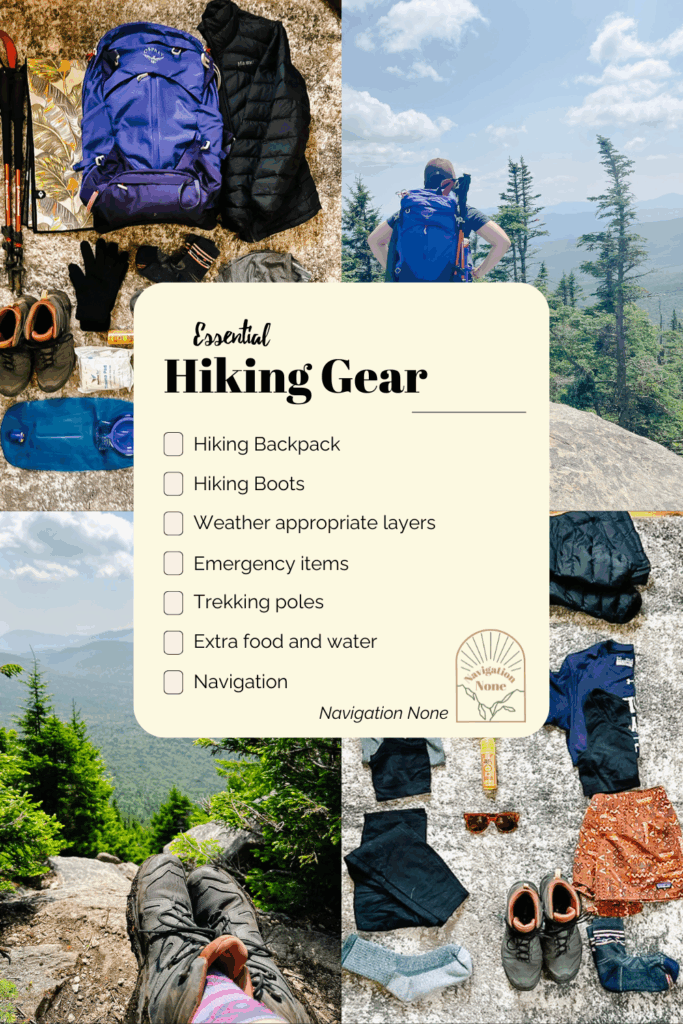
Getting all the essential hiking gear for beginners doesn’t have to be confusing or expensive—especially if you’re just getting started. Whether you’re new to hiking or getting back into it after time away, this guide will walk you through what essential hiking gear you truly need, what’s nice to have, and how to save money along the way—all from years of personal trial and error.

Some of the links on this site are affiliate links, meaning I may earn a small commission if you make a purchase through them, at no additional cost to you. Thank you for your support!
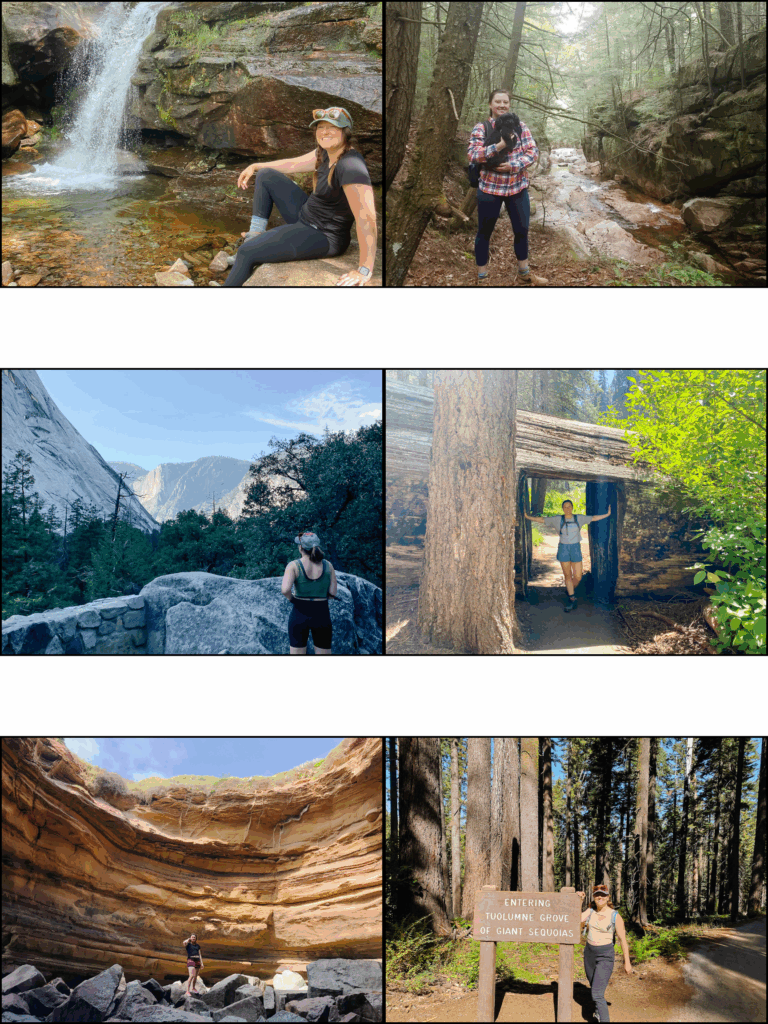
I’ve been hiking since I was a kid growing up in the White Mountains of New Hampshire. In those early years, my gear was minimal—just like the trails we did as a family. But as the hikes got harder and the years wore on, I created a core set of essential hiking gear that goes with me everywhere, some that’s seasonal, and others that aren’t essential but have made a big impact on my hiking experience.
Before I understood the importance of high quality essential hiking gear however, I was fine with using cheap backpacks without a frame, old and worn hiking boots, and I suffered painful descents because I was too cheap to buy hiking poles. The result of my miserly ways? Constant back and knee pain that took days to recover from- what was I thinking?! That’s not normal.
Once I finally upgraded to a supportive backpack with an actual frame, new hiking boots with good soles, and high quality trekking poles that don’t collapse under my weight I can do 10 plus mile days on the trail with only a day of recovery.
To help you avoid the literal years that I suffered through, I’m going to go over why the hiking gear you pick matters.

Why Gear Matters
When I was hiking the Tripyramids in New Hampshire, which is famous for its long and open slides, there was a woman in front of my group who physically could not find her footing on the slick, steep rocks. We watched her literally holding onto the mountain by the roots of a tree as she tried to get purchase with her boots, but they slid out from under her on every try. You could literally see the panic in her eyes.
My hiking partner had the courage to help her get to safety, but we talked about it later and agreed that her hiking boots were in need of replacing. Having good, reliable traction on slick and steep surfaces is an essential function of a good pair of hiking boots.
If you want to avoid the same mistakes (and close calls) like the story above, you’re in the right place. Let’s jump into the essential hiking gear that’ll save your body and make hiking more enjoyable.

Essential Hiking Gear for Beginners: The Basics Everyone Needs
Boots → Backpack → Layers → First Aid → Hydration

Hiking Boots
Hiking boots are essential hiking gear for beginners as they protect your feet, ankles, and overall stability on the trail. Unlike sneakers, they’re built with better traction (think Vibram soles that grip slick rock), ankle support for uneven ground, and water resistance to handle mud and stream crossings.
Skipping them can lead to serious injury—like my cousin’s friend, who broke her leg hiking in sneakers. Invest in a solid pair early on. Trust me, they’re worth it!

Best Hiking Boots for Beginners:
There are many hiking boot options on the market, the technology has truly come a long way. If you’re just getting started however, these are some solid and affordable options to get you going:

Hiking Backpack
Your second most essential hiking gear for beginners. A quality hiking backpack makes a huge difference in comfort, especially on longer hikes. Trust me on this- I spent years with a cheap, frameless backpack and once I invested in a quality one I was so much happier!
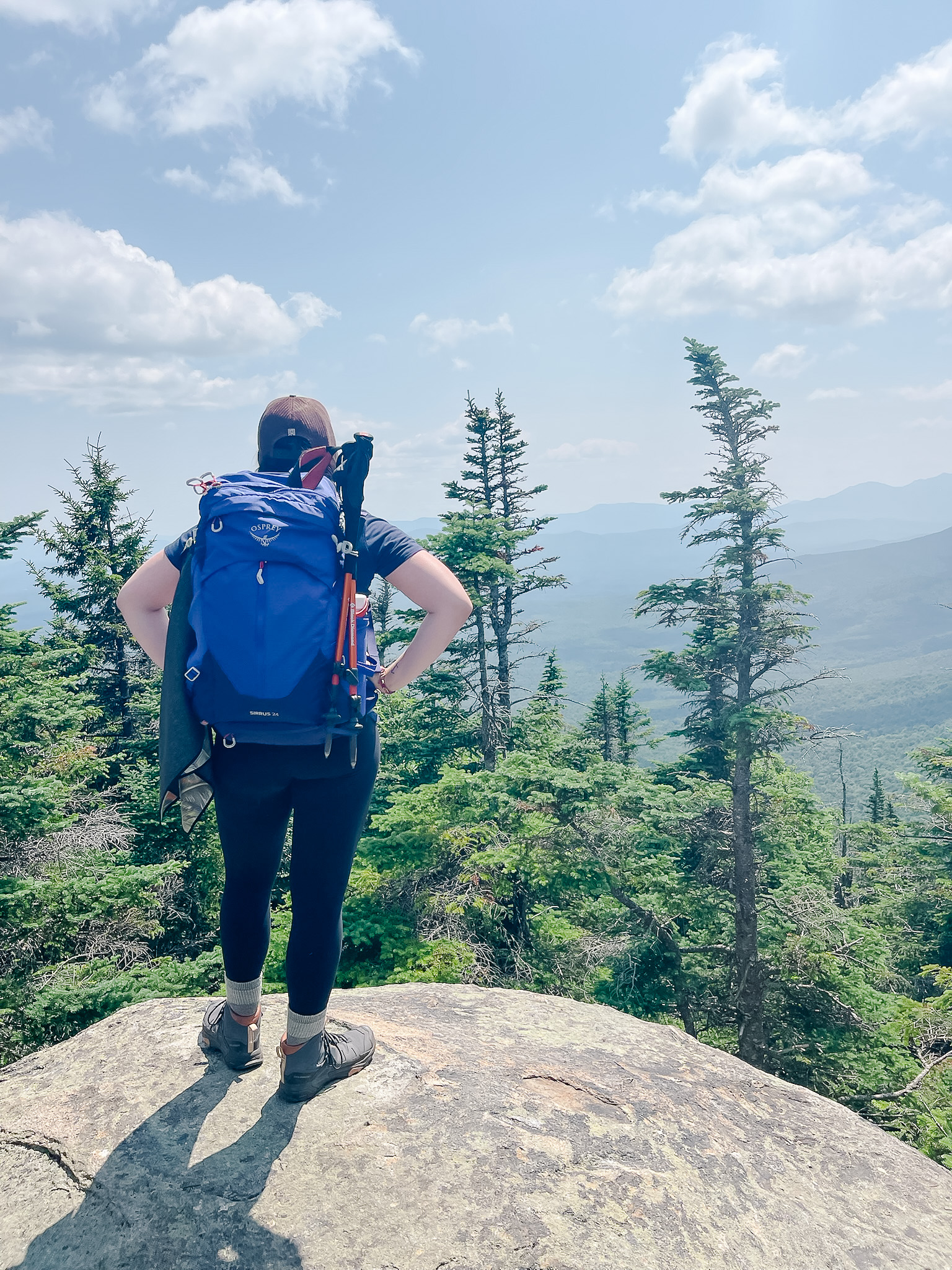
Look for one with a frame and support straps to shift weight to your hips rather than carry it on your shoulders, and you’ll want multiple compartments for organizing food, water, and gear. A 20–25L pack is ideal for day hikes.
Best Hiking Backpacks for Beginners:
Hiking backpacks can be expensive, but they’re so worth the investment! If you’re sure that you’ll get out more than a couple times a year and want to buy new, I suggest the following options based on my own experience and my friend’s:
Money Saving Tip:
Since hiking boots and a backpack are likely to be your most expensive gear purchases, I have some suggestions to save you some money:
- See if you can buy the boots or backpack used.
- Go to a discount store- either online or in person.
- Time the sales- you’d be surprised what you can get a new backpack for.
Essential Hiking Gear for Beginners: Layers
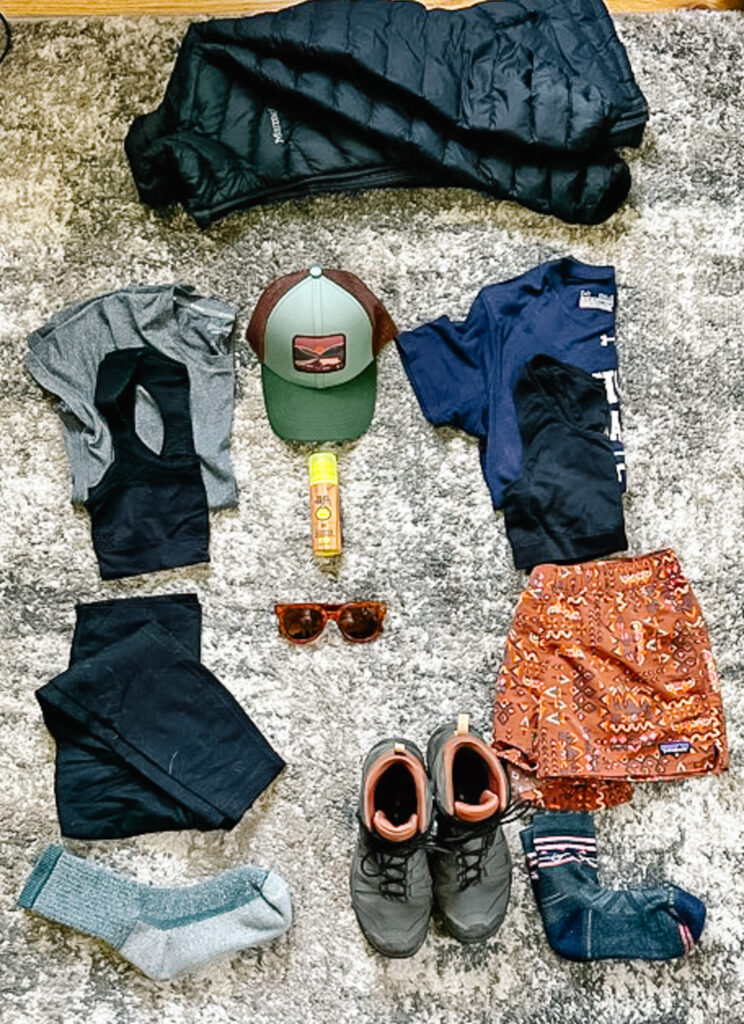
Layering for hiking is different than layering for any other occasion. You never know whether you’ll start under a blazing sun, hit a chilly wind, or dodge an afternoon shower. That’s why I never wear cotton—it gets wet easily and stays wet, sticks to your body and chills you, and doesn’t dry out quickly. It’s not just unsafe due to the risk of hypothermia, it’s also uncomfortable.
Instead, I rely on sweat‑wicking fabrics like merino wool or synthetics that pull moisture away and dry fast. They keep you comfy and temperature‑regulated no matter what the trail throws at you.
Layers to Wear for a Hike:
- Women: Sports bra that is sweat wicking- most of them are.
- Top: This could be a t-shirt or a tank top, as long as it’s moisture wicking.
- Bottoms: Hiking pants, leggings, bike shorts, or hiking shorts.
- Sun Protection: Don’t forget a baseball cap, your sunglasses and sunblock!
- Socks: Wearing crew height socks that are made out of Merino wool is essential- I highly suggest getting at least 2 pairs.
Money Saving Tip:
If you just can’t bring yourself to spend $15-$20 on a pair of SmartWool or Darn Tough, I suggest buying an off brand instead. REI makes great merino wool socks for about $10 less than the brands listed above.
Extra Layers to Pack for a Hike:
- Extra warm layer: oftentimes the summit is windy and I chill quickly once my clothes are soaked through with sweat. Even in the summer, I always make sure to pack an extra layer that’s warm and dry for the summit lunch. That extra layer could be a puffy jacket, a fleece jacket, or a flannel.
- Weather shell: for rain or wind protection.
- Head + Hand protection: a light beanie or gloves, even on mild days!
- Extra Merino wool socks & shirt: Dry socks and a dry t-shirt can make a huge difference.
Money Saving Tip:
Before you head to the store or load up your Amazon cart, I suggest looking around your house to see if you already own. Most exercise clothing is already moisture wicking, and there’s a good chance you already have something that will work.
And if you’re still not sure what to wear, I have several guides and outfit ideas to give you some inspiration. The important part is to keep in mind possible weather changes and wearing those wicking fabrics.
All seasons, All Reasons
A layered approach means you’re prepared, adaptable, and never caught shivering or soaked. Layers are a peace of mind while out on the trail so that you’re dry and comfortable for every mile.
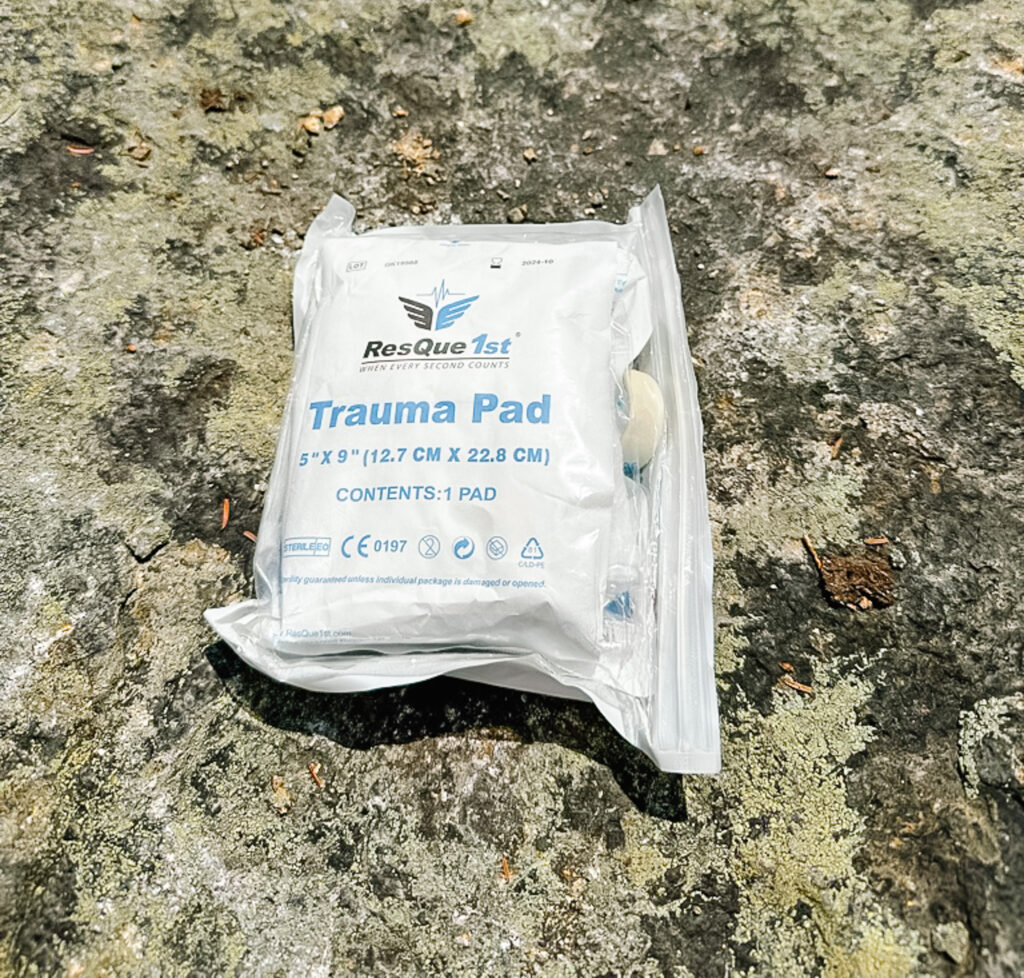
First Aid Kit
Packing a first aid kit is essential for keeping safe on the trail. This is an essential hiking gear you’ll be grateful that you packed should anything happen.
Money Saving Tip:
Before buying a pre-packaged kit, see if you can come up with one with the items you may already have on hand.
Here’s a list of some basic items that you’ll need in your kit:
- Antiseptic/wound cleaning cloths
- Over the counter pain relievers
- Band aids
- Antihistamine
- Wound cleaning gel
If you’d like to buy one pre-made, I like this one from Amazon.
Hydration
Having enough water on your hike is crucial! You don’t go to the gym without water, so you definitely don’t want to go hiking without it.
Since you’re probably going to be sweating a lot, I suggest bringing another hydrating drink that has electrolytes and other essential elements lost during sweat. Here are some ideas:
- Nalgene with LiquidIV or another electrolyte powder mixed into water
- Powerade
- Gatorade
- Coconut water

Optional Hiking Gear for Beginners: Hands Free Sipping with a Water Reservoir
You might notice that a lot of hikers have a hose coming out of their backpack- that is the long straw attached to their water reservoir or bladder. This is a rubber pack that goes in a specific compartment in your backpack so that as you’re hiking you can suck on the mouthpiece and get a sip of water.
You can get this in a two or three liter size depending on the distance of your hike. I have one and I love it- but I don’t suggest you buy the brand I have. There are much better options out there.
I suggest the Gregory 3D Hydro as it’s easy to clean and dry and it doesn’t leak.
Although this isn’t an essential hiking gear for beginners- it does make a difference when putting in longer days.
Essential Hiking Gear for Beginners: Safety
In addition to the basics for comfort and basic safety, there are some other essential hiking gear for beginners that should be kept in your pack for every trip in case of emergency. If something happens such as an injury, a river that’s too high to cross, or if you get lost you and you need to stay the night in the woods, having these items in your pack might save your life.
That might sound intense, but truthfully the likelihood of that happening are quite low. However, I tend to be a conservative hiker and I’d rather carry and extra five pounds of items that I never use, if that means that I’m prepared should something happen.
Now that you understand why this safety gear matters, let’s go over what you need.
Shelter
Should you need to spend the night you’ll need something to keep you warm through the night- which is why it’s an essential hiking gear for beginners.
For this you’ll need a bivvy, which is short for bivouac, or “a temporary camp without tents or cover, used especially by soldiers or mountaineers.”
The bivvy linked below is made using material that reflects the heat from your body back to you, so that even on a cold night you likely won’t get hypothermia. This will make a night in the woods more comfortable and keep you more prepared.
Illumination
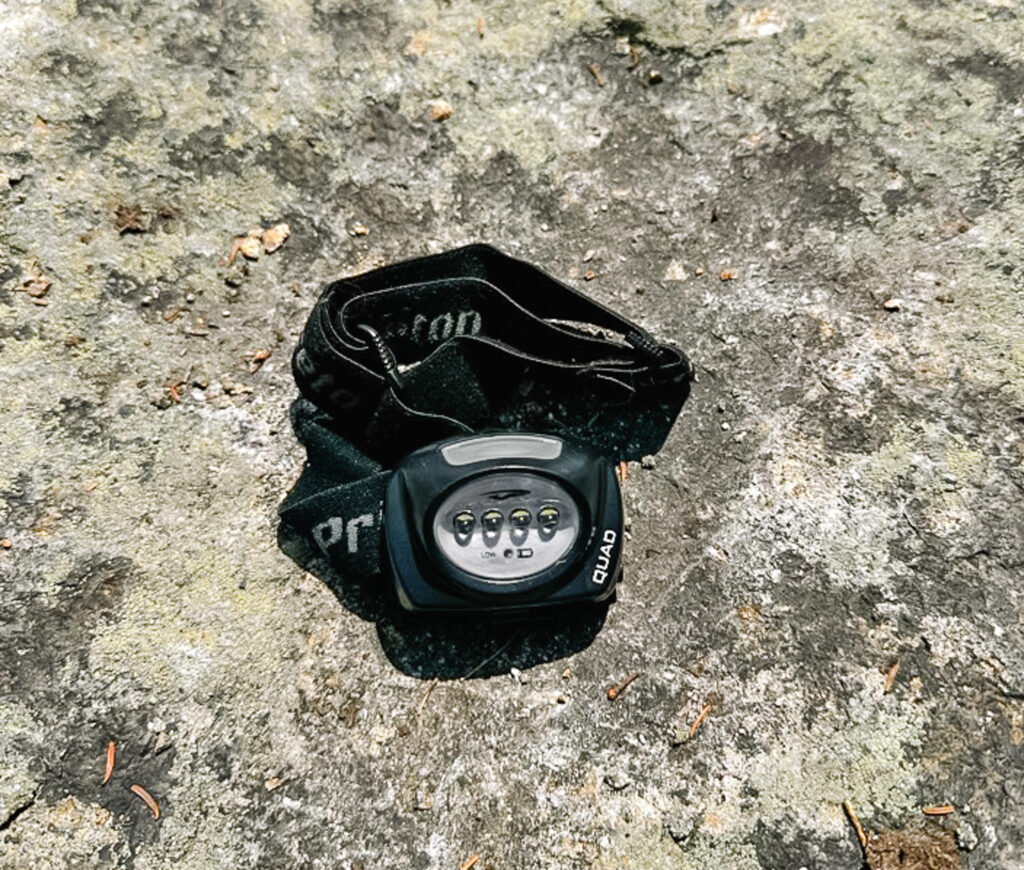
Should you need to spend the night, you’re also going to want something to help you see in the dark.
Enter: the headlamp! Of course you don’t need a headlamp, you could pack a small handheld flashlight, but the ability to strap the light to your head means that you have hands free to catch you if you fall and it will be easier to set up shelter in the dark.
You can get a decent headlamp for $10-$15, so this is a tool that won’t break the bank and is useful to have on hand.
As an extra precaution, I like to keep extra batteries in my pack as well.
Even if you don’t need to spend the night outside, a headlamp is nice to have for a long hike- I used one when hiking Half Dome in Yosemite. Even if you don’t need this right away for hiking a long hike, this is still an essential hiking gear for beginners as it will keep you safe.
I suggest this one from Amazon.
Knife or a Multi-Tool
You may need to build an emergency shelter, clear some branches from the trail, or cut some gauze for an injury.
Keeping a small knife or multitool such as a Swiss Army knife or a Leatherman is an essential hiking gear for beginners, and really any hiker. I’ve used my knife even on small day hikes- you never know when you might need to cut into something.

Emergency Fire Starter
Keeping a small bag of waterproof matches or buying a firestarting kit is well worth the $5-$10 it costs to buy. If you have to spend the night in the woods or light a fire to help search and rescue find you, having a way to quickly get a fire going will give you a huge amount of peace of mind.
Optional Essential Hiking Gear For Beginners That’s Worth the Money
Everything that I’ve gone over so far is the basic gear that literally every hiker should have before setting out on the trail. Over the years I’ve found some gear that isn’t necessary for survival and safety, but truly makes the hiking experience so much more comfortable that I do think they are worth the money, so I’m going to give you some more gear that you might want to start collecting.
Trekking Poles
Trekking poles are hiking gear that will help tremendously with steep declines and relentless climbs, and if you have any intention of doing long days or want to backpack, you’re going to need these guys.
Using trekking poles especially on the descent help me prevent my knees from hurting and they even help me prevent my ankle from rolling. For long days on the trail I like to start with them as soon as the trail starts getting steep as it helps me preserve my energy for the long miles ahead.
f you’d like to learn more about trekking poles and how to use them, I go over them in more detail in this post:
Why You Need Trekking Poles and How to Use Them
Best Trekking Poles for Beginners:
If you’re looking to add them to your essential hiking gear list right away, I have found that my and my friends have had good luck with these two:
- LEKI – Great budget option that doesn’t compromise on quality.
- Black Diamond – The poles that I personally use and swear by.
Gaiters
A simple piece of stretchy fabric pulled over the top of your boots does wonders for the comfort of your hike. Gaiters keep rocks and dirt out of your boots, preventing you from stopping every ten minutes to dig them out.
They also keep your laces tucked in so that they don’t get stuck on roots or twigs along the way, possibly preventing a fall.
My friends and I like Dirty Girls– they’re the best!

Water Filtration
While you probably brought plenty of water, having a way to filter some in an emergency might be a source of relief for you as it is for me. Having that little bit of extra security is more than worth the small amount of weight it adds.
There are two main ways to filter water; mechanically and chemically.
Iodine tablets are added to water if you filter it chemically, and although it works great it makes the water taste a little funny. You also need to make sure that you bring an actual water bottle along, not just a bladder. To filter mechanically you’ll need to bring a water filtration system, the most popular and portable being the LifeStraw.
Solar Phone Charger
If you plan on using your cell phone as your main source of navigation and a form of emergency contact, a portable solar charger for your cell phone is probably a good idea. Is your phone is searching for service it’s likely draining a lot of energy and you might be stuck with a dead cell phone- this is bad news if you get lost or hurt.
A good solution for this problem is to pack a portable solar powered cell phone charger. Sure it’s heavy, but if it saves your life who cares?

Bathroom Kit
If you’re drinking water, you’re likely going to need to go in the woods at some point. Enter: the bathroom kit. I like to pack compostable toilet paper, hand sanitizer, and a small trowel in a plastic baggie. If you don’t want to air dry or dig a hole for a #1, try a Kula Cloth! I air dry so I can’t attest to this personally, but I see it on the trail pretty regularly.
- Note: if you do have to go #2 in the woods you will have to bury it and then cover it up with some dirt and moss unfortunately. Thus, the small trowel.
Face Towel
Having a quick drying towel that you can wipe your hands off on as well as your sweaty face makes such a big difference. I always keep a small towel on the outside of my pack so that I can quickly wipe my hands and face as I go, and I notice a big difference when I forget to pack it!
I like this brand as it’s super high quality, they offer cute patterns, and even the small size is plenty large enough.
Essential Hiking Gear for Beginners by the Season
Each season brings with it it’s own unique needs for hiking gear. In the summer you have to consider the harsh sun and how to protect yourself, while in the winter you’ll need to worry about hypothermia.
Here are some basic extra hiking gear that you might need for each season, but I do go into more details in other posts that are linked below.
Basic Winter Hiking Gear
If you’re thinking of hiking in the winter, you’ll need more gear. Here’s the basics:
- Hand warmers – to put in your pockets for when the cold gets really bad
- Microspikes – for traction so that you don’t slip and fall on the ice
- Thermos – to put warm drinks and soups in, warming you up from the inside out
For a more detailed breakdown, check out this blog post:
Essential Gear for Winter Hiking
Basic Summer Hiking Gear
Hiking in the summer requires the least amount of extra gear, but hiking in the hot sun does require some extra thought and preparation.
- bug spray – I prefer the all natural, if I use it at all
- extra water – I always use a three liter bladder for summer hiking as well as an electrolyte drink
- sun shirt – I like to wear a long sleeved, hooded shirt for hiking in the hot sun
- Towel – for wiping off the sweat as I go along
Basic Fall Hiking Gear
Like summer, hiking in the fall doesn’t require a lot of extra gear. Here’s a list of some extra safety and comfort items that I recommend:
- Extra layers – the top is usually windy, so I always pack my puffy jacket fo the top
- Layered clothes – in the fall the mornings and evenings are usually quite chilly, so I like to wear layered clothes.
- Example: wearing bike shorts under a pair of hiking pants, and a long line bra under a long sleeve so that I essentially have two outfits, allowing me to shed as needed throughout the day.

My Go-To Setup: What Hiking Gear I Personally Bring
After years of hiking, experimenting with gear, and failing and being unprepared for situations, I have a hiking gear system that is honed. I’m going to share that knowledge with you, so that you too can be prepared for whatever the trail throws at you.
My personal hiking gear list:
- Hiking backpack
- Hiking boots
- Layers appropriate for the weather
- For inspo:
- Winter hiking clothes
- Summer hiking outfits
- Fall hiking outfits
- For inspo:
- Hydration
- 2-3L bladder
- Nalgene bottle with electrolyte powder mixed in
- Food and snacks
- For inspo:
- Warm layers for the top
- Trekking poles
- Bathroom kit
- Emergency fire starter
- Bivvy
- Iodine tablets
- Map of the area
- Headlamp
- First aid kit
- Knife
- Extra socks
- Extra shirt

Now that you’ve got the full list of must-have hiking gear, you’re ready to hit the trail with confidence. If you’re just starting out, check out my FREE Micro-Adventure Planning Kit that has all the information you need to get started and includes multiple packing checklists. Get started below!


Pin for Later!